
These kindergarten worksheets work on two early skills: pencil control for handwriting and number sense for counting. These eight free printables start with tracing lines and move on to numbers from 0 to 20, counting and uppercase letters. Each one fits on a single page and takes about five to ten minutes.
Skills these worksheets practice
Vertical lines traced from top to bottom; horizontal lines, humps, waves, zigzags and loops traced from left to right.
Tracing 0 to 20. The Common Core standard K.CC.3 expects children to write numbers from 0 to 20 by the end of kindergarten.
Counting groups of one to five dots and writing how many there are (K.CC.4). Later in the year, kindergartners answer “how many?” questions about as many as 20 objects (K.CC.5).
Uppercase A to E with dotted outlines, starting each letter at the top.
Tracing lines worksheets
The three sheets get harder step by step: straight lines, then humps and waves, then zigzags and loops, which make the pencil change direction without lifting. On these three sheets, a green dot shows where to put the pencil down, and a solid shape at the start of each row shows what to copy.
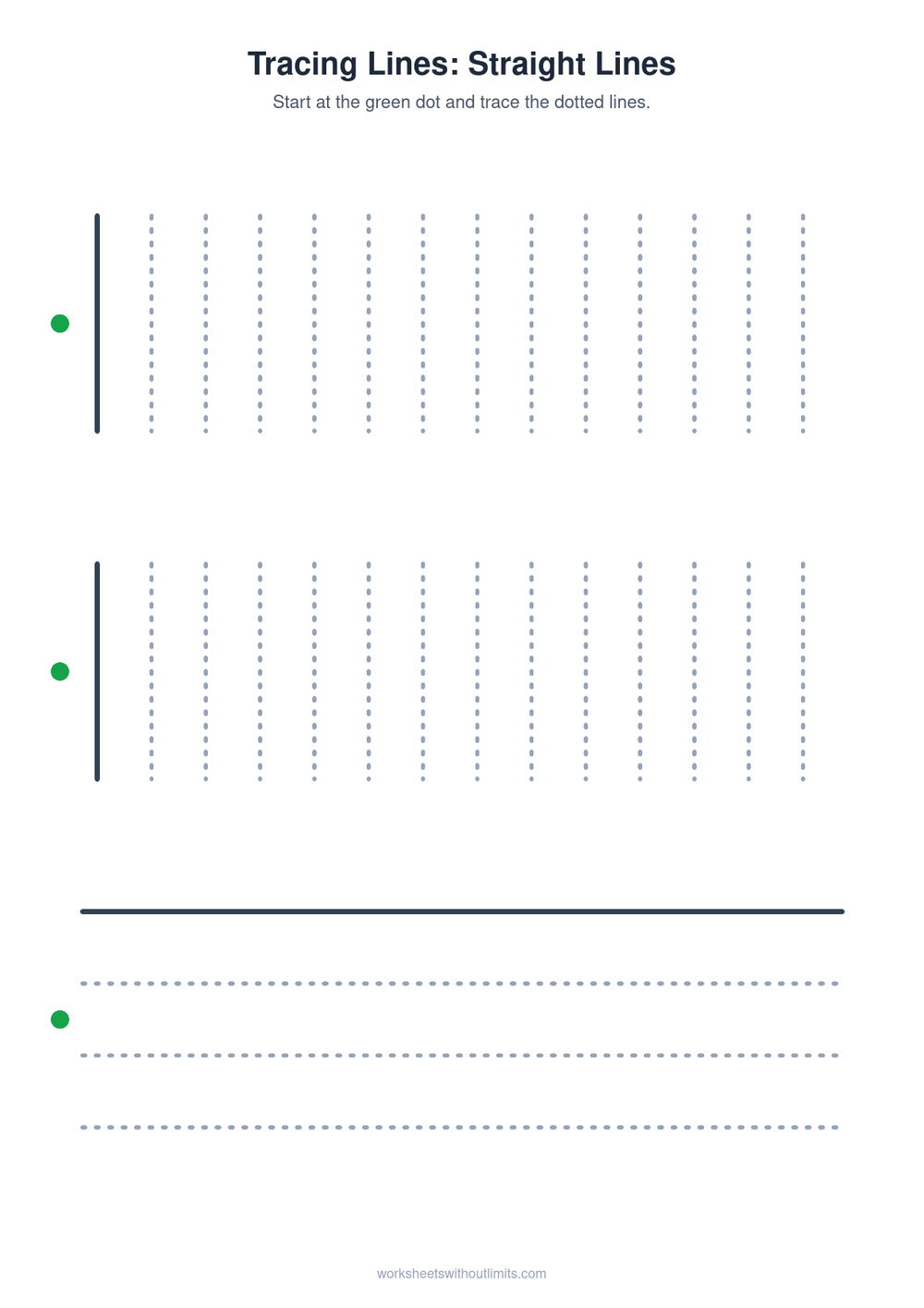
Vertical and horizontal – PDF
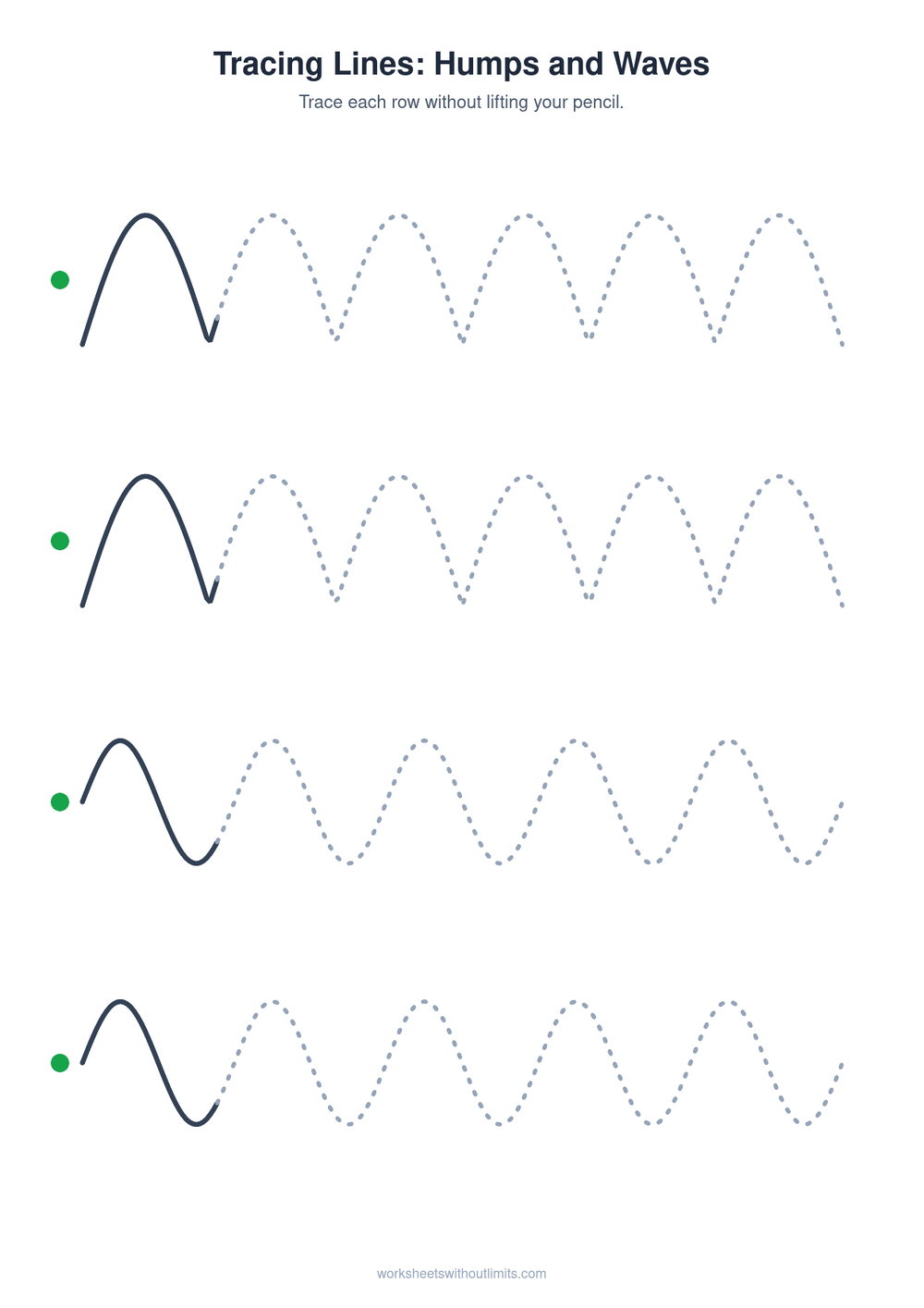
Smooth curved lines – PDF
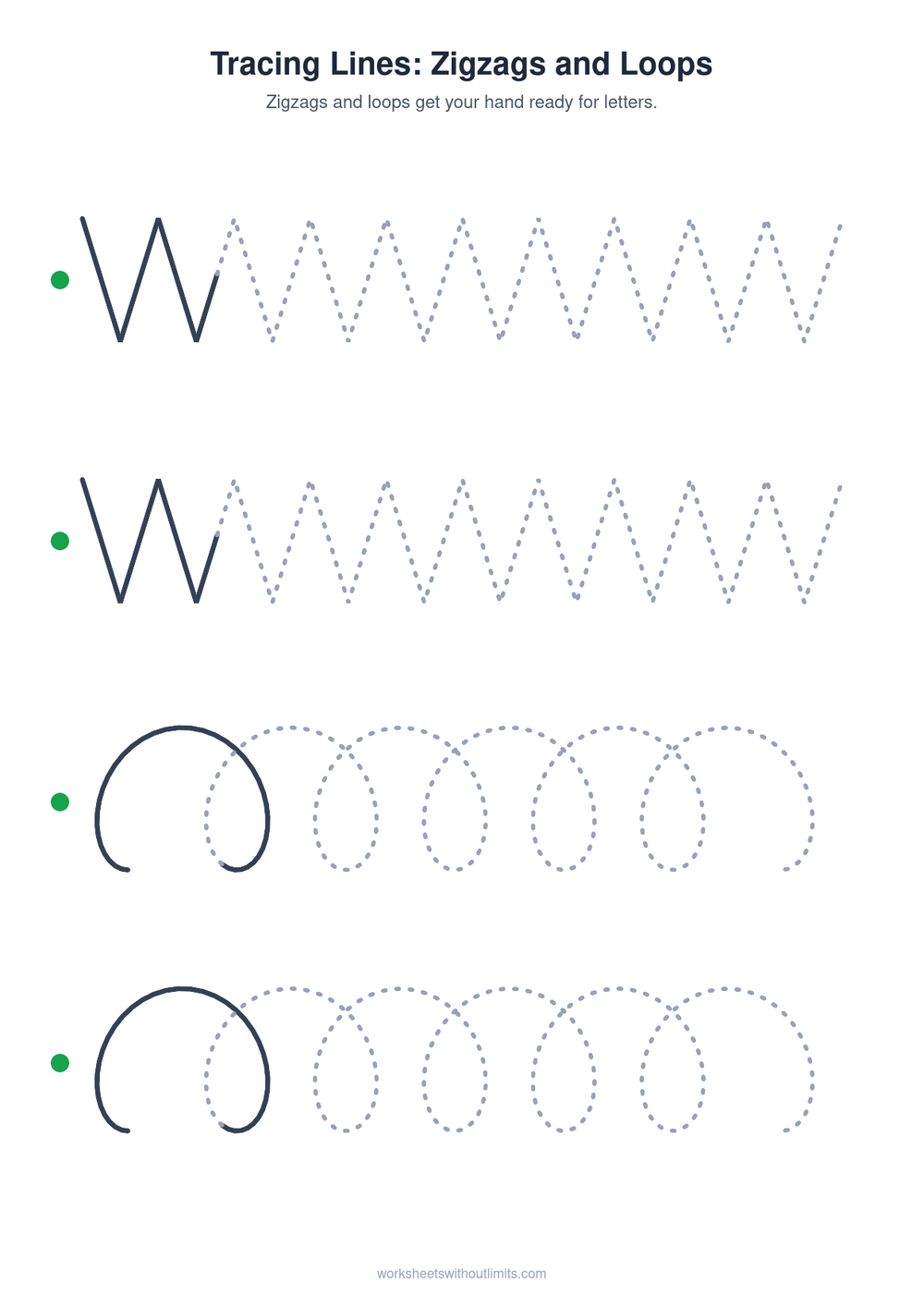
Ready for letters – PDF
Numbers, counting and letters
On the counting sheet, your child points to each dot once while saying the numbers in order. The last number said answers “how many?” (K.CC.4b), and that is the number to write in the box. Every number and letter on these sheets starts at the top. 10 is the first number written with two digits: one ten and zero ones, and the teen numbers 11 to 20 are one ten and some ones.
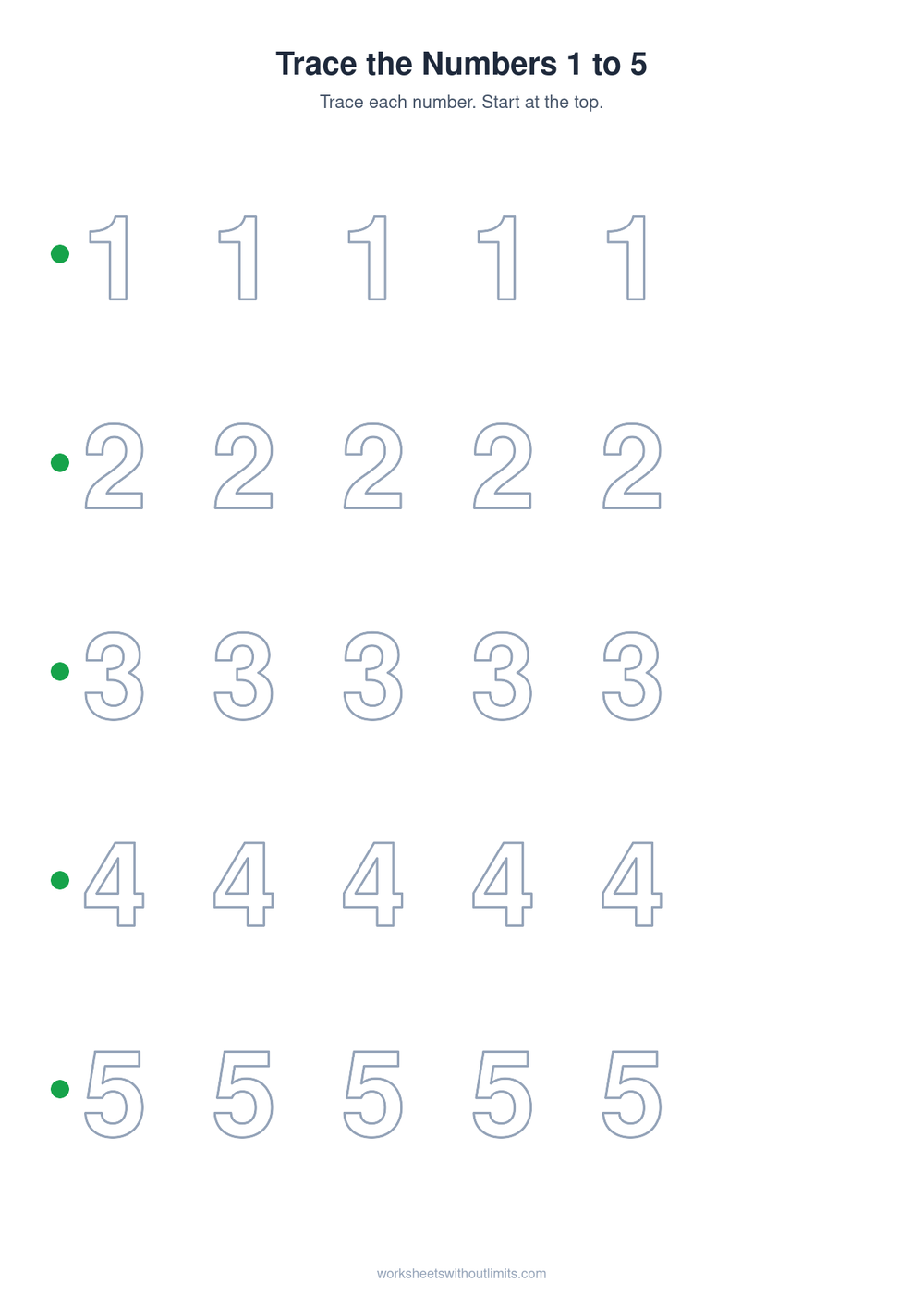
Five of each number – PDF
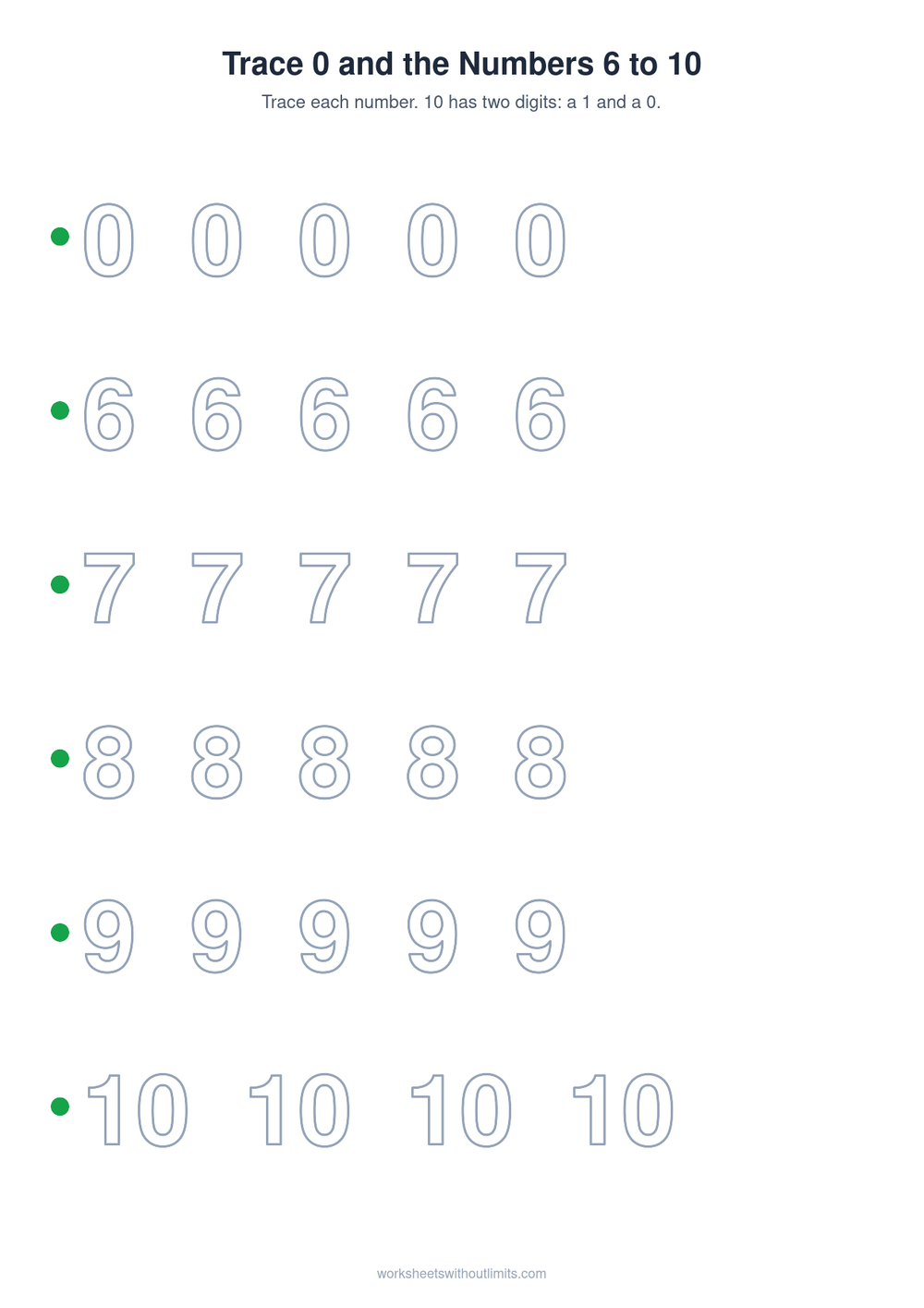
Zero plus 6 to 10 – PDF
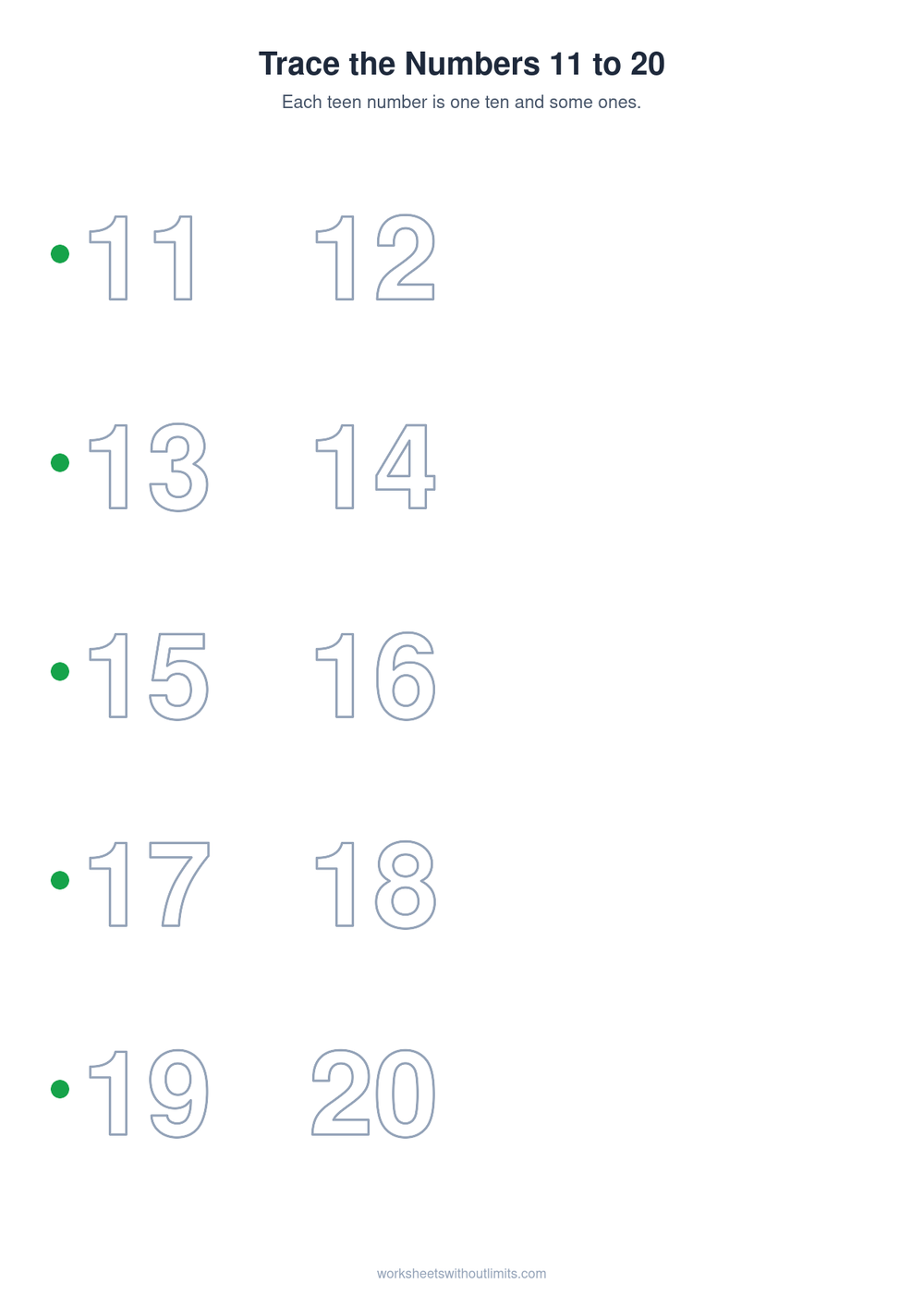
The teen numbers – PDF
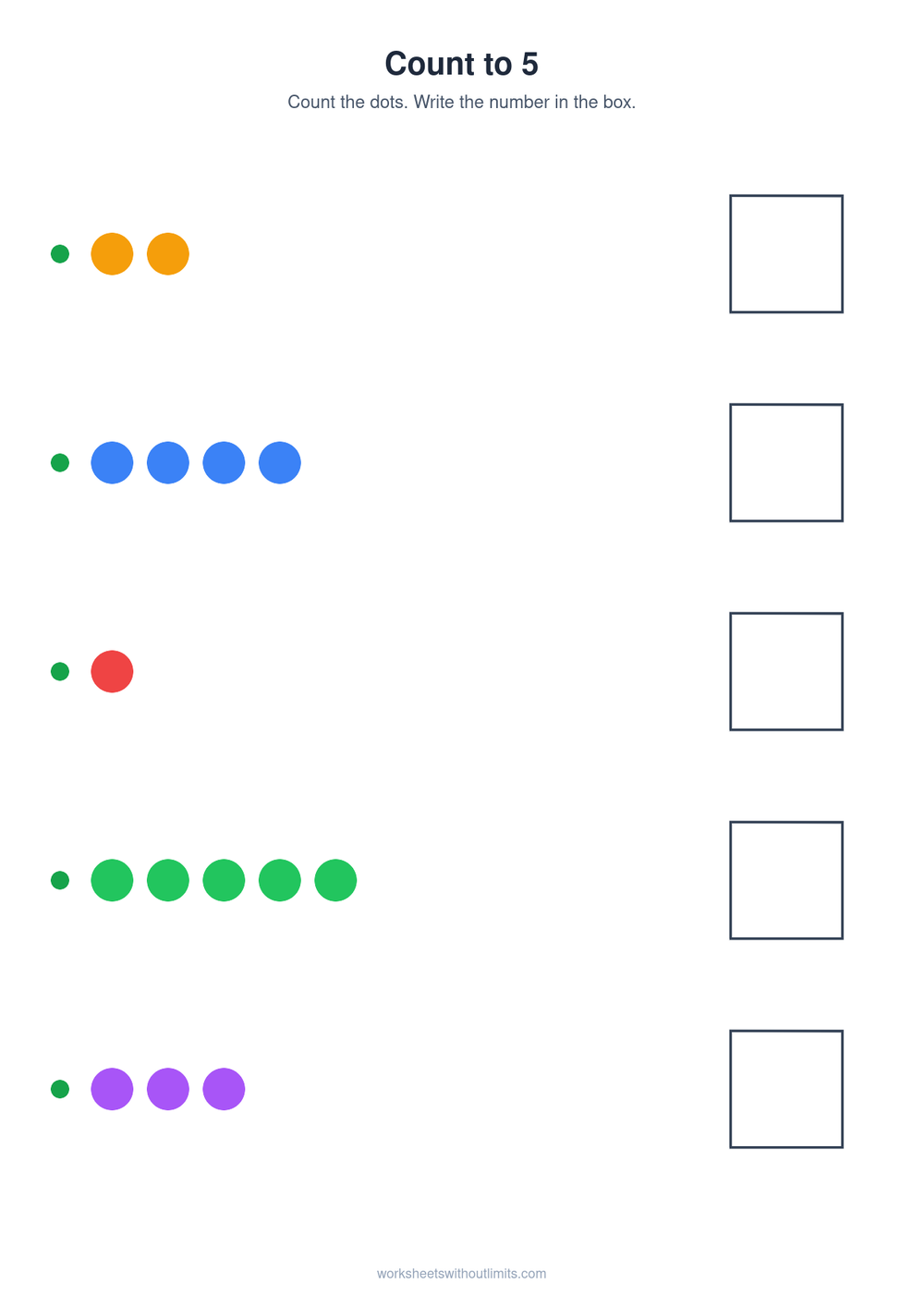
Count the dots, write the number – PDF
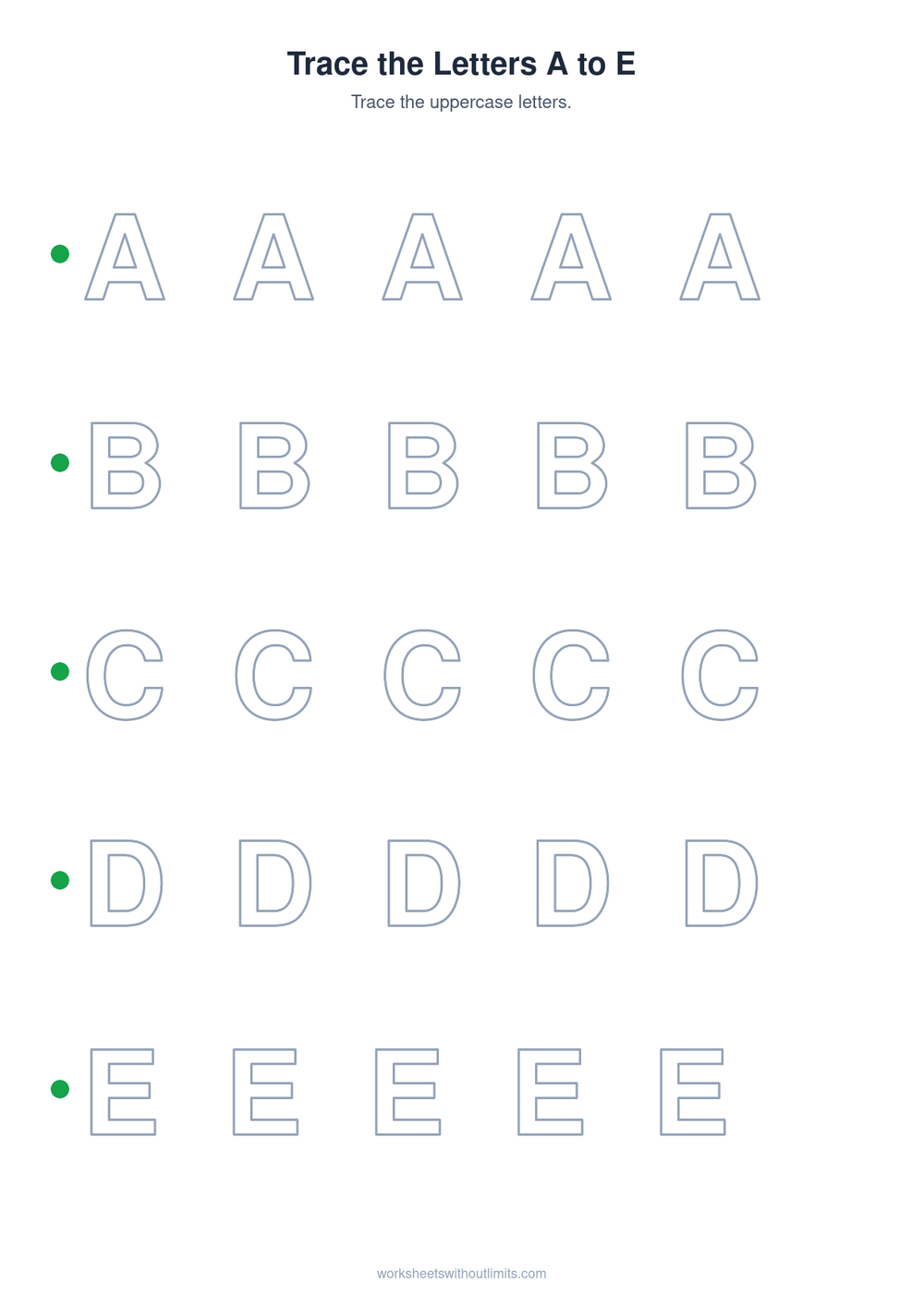
Trace the letters – PDF
What kindergarten standards expect
Many US states use the Common Core State Standards or standards based on them. By the end of kindergarten, children are expected to write numbers from 0 to 20 (K.CC.3), count to answer “how many?” about as many as 20 objects (K.CC.5), and print many uppercase and lowercase letters (L.K.1a). These sheets are the starting point: numbers to 20, counting to 5 and the first five capital letters. Short daily practice works better than one long sitting. Put a sheet in a sheet protector and your child can trace it again with a dry-erase marker.
Ready for more? Move on to 1st grade worksheets, starting with first grade addition and sight words.
FAQ
How do I know my child is holding the pencil correctly?
Look for the tripod grip: the pencil is pinched between the thumb and index finger and rests on the middle finger. Some kindergartners still hold the pencil with their whole fist or with four fingers; short or triangular pencils make the tripod grip easier.
Should my child trace lowercase letters too?
Yes, kindergartners learn both (Common Core L.K.1a). Many children find uppercase letters easier to start with because they are made of straight lines and simple curves.